Beetroot nutrition
So you think you know all about the humble beetroot – the root vegetable so often found in pantries since World War II. But you might be surprised to learn that it is so much more than just a pickle. It is actually a nutritional powerhouse, now widely regarded as a “superfood”, and best friend to those who engage in high-intensity, stamina and endurance exercise.
Beetroot history
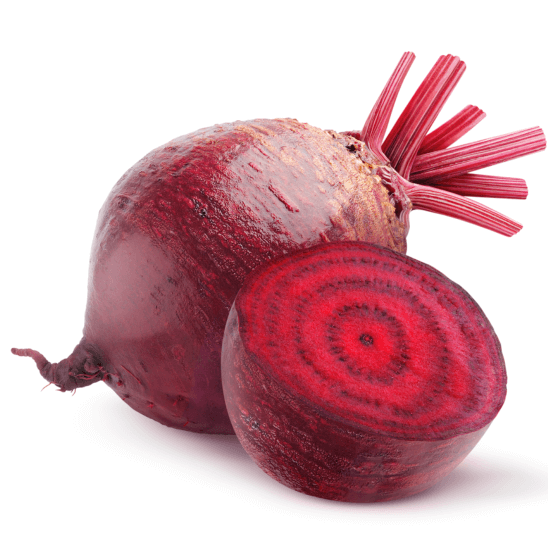
The beetroot is no stranger to the average household. Also known as “table beet”, it is one of the many cultivated varieties of Beta vulgaris and the most common variety found in Britain, North America and Central America today.
In the earliest days of its consumption, the leaves were most commonly eaten by people living in the eastern Mediterranean and Middle East. The Romans then began to make use of the root for various medicinal purposes. Over the years, it became popular in Central and Eastern Europe for culinary purposes too.
Beetroot, as we know it today, was only cultivated in the 16th century. Interestingly, modern varieties are derived from the sea beet, an inedible plant that grows wild along the coasts of Europe, North Africa and Asia.
An unlikely “super” hero
Unlike some of the other, better known superfoods, like wheatgrass, barley grass, spirulina or acai berry, beetroot is not particularly exotic. But don’t let that fool you.
What has traditionally been viewed as a boring, somewhat unappetising vegetable, is really a “super-root” in disguise.
It is a rich source of both carbohydrates and plant proteins, along with a broad spectrum of vitamins, minerals and other essential nutrients.
At the same time, it has a very low caloric value and is almost entirely free of fat. It is also a low-GI food – the sugar conversion process is slow, which supports stable blood sugar levels.
Beetroot antioxidants
You can’t have failed to notice the vivid colour of beetroot – whether the deep purple, the bright yellow or the lesser seen candy-stripes. Like so many other superfoods, these colours offer a visual clue as to the high level of antioxidants, carotenoids and flavonoids found in beetroot as a result of its pigment.
The notorious red colour compound is called betanin (or beetroot red), a pigment which is a well-known antioxidant and phyto-chemical. However, all beets contain betalain antioxidants – a class of red and yellow pigments found in plants.
Vitamins and minerals in beetroot
Beetroot is also rich in a broad spectrum of vitamins and minerals, contributing to its classification as a superfood. For instance, it contains high levels of folate and vitamin C (another powerful antioxidant), as well as riboflavin, niacin and thiamin, vitamin K, calcium, silica, potassium, magnesium, phosphorus, zinc and iron.
Dietary fibre
Beetroot is high in dietary fibre – both soluble and insoluble. A 100g portion – about two or three small beetroot – contains as much as 10% of the recommended daily allowance.
Fibre is an essential component of healthy digestion and supports everything from stable blood sugar levels to natural cleanse and detox processes in the body.
Dietary nitrate
More recently, a lot of research has been undertaken on beetroot’s capacity to absorb and store exceptionally high levels of nitrate – a nutrient involved in many of the processes that are essential for efficient exercise performance, including blood flow and oxygen usage.
In particular, a study conducted by Exeter University in the UK received a high level of media attention when it found that cyclists who drank a half-litre of beetroot juice several hours before setting off were able to ride up to 20% longer than those who drank a placebo blackcurrant juice.
Since that study, both beetroot and beetroot supplements have been of particular interest to athletes.
Supporting general health and vitality
The unique combination of nutrients found in beetroot mean that it can offer ideal support for general health and vitality, including:
- a healthy heart and cholesterol levels
- detoxification and liver function
- a strong immune system
- healthy homocysteine levels
- normal tissue growth
- musculo-skeletal health
- healthy skin, hair and nails
- stable blood sugar levels
- stamina and energy levels
- stable moods
- and healthy digestion.
Belonging to the same family as two other nutritional titans, chard and spinach, both the leaves and roots of beetroot can be eaten. Incorporate it into your daily diet and your body will thank you.
For more information, visit our main website